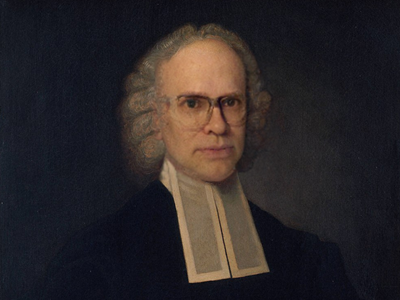
Jonathan Edwards exhibit display
Active

Synthetic Media for Religious Education

“Deepfakes,” synthetic media generated by deep neural networks, have become increasingly common in many sectors, from social media, edtech, and business marketing to museum exhibitions. This trend raises ethical concerns about voice and image manipulation. While much ink has been spilled on the topic of AI and ethics, the application of deepfakes to historical figures warrants further scrutiny. Unlike living subjects, historical figures cannot contest replications of their image and voice. This historical silence makes ethical considerations crucial. In light of “posthumous creativity,” scholars are now rethinking originality, authenticity, and intellectual property.

Project Team

  • Mikey Tang
  • Graziano Krätli
  • Clifford Anderson

Publications

  • Tang, Michael Zhaohan, Graziano Krätli, and Clifford Anderson. "The Ethics of Deepfakes for Cultural Heritage: A Hybrid Exhibition of Reanimated Jonathan Edwards as a Test Case." Poster presented at the ACH 2025 Conference, Virtual, June 11-13, 2025.
  • Anderson, Clifford B., Graziano Krätli, and Manal Mekhael. “Analyzing Images: Human and Machine Classification.” In AI and Academic Libraries: Practical Strategies for Ethical Integration, Instruction, and Innovation, edited by Karim B. Boughida and Russell Michalak. Chicago: ACRL Press, 2026. Forthcoming.

  • Anderson, Clifford B. "Beyond ‘deepfakes’: Stewarding Authenticity in Digital Cultural Heritage." Presented at the Wikimedia+Libraries International Convention 2025, Mexico City, Mexico, January 16, 2025.
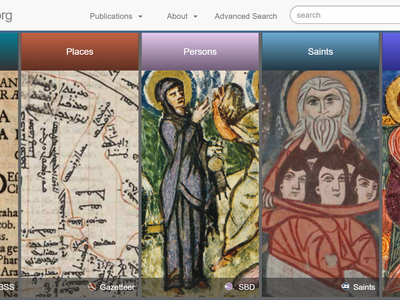
Syriaca.org interface
Active

Syriaca.org

Syriaca.org: The Syriac Reference Portal is a digital project for the study of Syriac literature, culture, and history. Today, a number of heritage communities around the world have linguistic, religious or cultural identities with roots in Syriac language and culture. Syriaca.org exists to document and preserve these Syriac cultural heritages. The online tools published by Syriaca.org are intended for use by a wide audience including researchers and students, members of Syriac heritage communities and the interested general public. In order to meet the diverse needs of users, the design of Syriaca.org is inherently collaborative and fluid.

General Editorial Committee

  • Dr. Thomas A. Carlson — Oklahoma State University (2012-2017)
  • Dr. Nathan P. Gibson — Ludwig-Maximilians-Universität München
  • Dr. Jeanne-Nicole Mellon Saint-Laurent — Marquette University (Assistant Director)
  • Dr. David A. Michelson — Vanderbilt University (General Editor)
  • Dr. Daniel L. Schwartz — Texas A&M University (Director)
  • Dr. James E. Walters — Rochester College, Michigan

Lab Contributors

  • Mikey Tang
MapTheo visualization
In Development

Mapping Theology (MapTheo)

Theology is fed by complex processes of reception and interaction with the theological tradition. Lines of reception are exemplified in research and shape the self-perception of theology and its themes, traditions and canonical texts. The MapTheo project aims to use digital research methods to map and analyze the topics, lines of reception and formation of tradition in theology on the basis of publications in journals, monographs and anthologies.

Project Lead

  • Dr. Clifford Anderson — Computational Theology Lab, Yale
  • PD Dr. Frederike van Oorschot — TheoLab, Heidelberg/Zurich
  • Johannes Fröh — TheoLab/Bonn University

Lab Contributors

  • Hope Chang
  • Arne Kaefer

Project Board

  • Prof. Dr. Raúl Zegarra-Medina — Harvard Divinity School
  • Prof. Dr. Evan Kuehn — North Park University Chicago

Project Partners

  • Dr. Martin Faßnacht — FID Theologie/IxTheo
  • Timotheus Chang Whae Kim — FID Theologie/IxTheo
Women in Religion: AI for Wikipedia Biographies
Active

Women in Religion: AI for Wikipedia Biographies

This project explores how generative AI can lower barriers for volunteer editors working on content gaps and marginalized topics on Wikipedia, enabling them to create stub articles that they can then edit manually. The goal is to assist with onboarding new editors while keeping human editorial judgment and community norms central to content creation and review. The project’s ultimate purpose is to make Wikipedia more inclusive and equitable by amplifying underrepresented voices and subject matter through thoughtful human-AI collaboration.

Lab Contributor

  • Clifford Anderson

Collaborators

  • Rosalind Ann Flynn
  • Colleen Hartung
  • Christine Meyer
  • Winifred Whelan
  • Others...

Publications & Presentations

  • Anderson, Clifford B. "Generating Stub Articles about Women in Religion: An Experiment in Retrieval Augmented Generation and Fine-Tuning LLMs." Presented at the Artificial Intelligence and Religion Unit, Annual Meeting of the American Academy of Religion, Boston, MA, November 23, 2025.
  • Anderson, Clifford B., Rosalind Ann Flynn, Colleen Hartung, Christine Meyer, and Winifred Whelan. "Using AI to Support Editors of Underrepresented Topics on Wikipedia." Presented at WikiConference North America 2025, New York, NY, October 18, 2025.